

Description
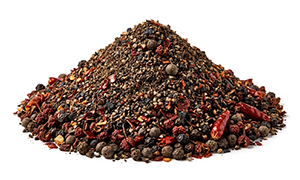
Peppery

Sweet
Additional information
| Strain Type | Indica-Dominant Hybrid |
|---|---|
| Seed Type | Photoperiod |
| % Sativa | 35% |
| % Indica | 65% |
| THC | 27% |
| CBD | Low |
| Harvest Indoor | 16 – 20 oz/ft2 (450 – 550 gr/m2) |
| Harvest Outdoor | 19 – 23 oz/ft2 (540 – 660 gr/m2) |
| Yield Category | Very Heavy |
| Flowering Time | Long (70-90 Days) |
| Height (in) | +70 inches |
| Effects | Tingly, Uplifting |
| Flavor | Creamy, Spice, Sweet |
| Best Time of Use | Anytime |
Strain Details
| Strain Type | Indica-Dominant Hybrid |
|---|---|
| Seed Type | Photoperiod |
| % Sativa | 35% |
| % Indica | 65% |
| THC | 27% |
| CBD | Low |
| Harvest Indoor | 16 – 20 oz/ft2 (450 – 550 gr/m2) |
| Harvest Outdoor | 19 – 23 oz/ft2 (540 – 660 gr/m2) |
| Yield Category | Very Heavy |
| Flowering Time | Long (70-90 Days) |
| Height (in) | +70 inches |
| Effects | Tingly, Uplifting |
| Flavor | Creamy, Spice, Sweet |
| Best Time of Use | Anytime |
Customer Reviews
4.5
100% Recommended (39 of 39)
Only logged in customers who have purchased this product may leave a review.
Dot I.08 (verified owner)
Purple, frosty, and smells like sweet gas.
daotgnihsif (verified owner)
Didn’t expect this much resin from a first-time grow, but it made curing genuinely exciting to watch unfold. Smell went from sharp and gassy right off the plant to sweet and pie-like within a couple weeks in the jar. Purple color was gorgeous too, and the buds looked almost white under all that frost.
forest404 (verified owner)
Underestimated the resin, overestimated my ventilation. Fixed it in time, no harm done. Buds turned out purple and frosty, and the cure smells like sweet gas station pie. Would grow again without hesitation.
niborallinav (verified owner)
From a management standpoint, this strain’s main demand is airflow relative to its resin output — bud density increases substantially through the back half of flower, and without adequate ventilation directly into the canopy, humidity can build in the denser colas faster than in less resinous strains. Color development followed a fairly typical late-stage pattern, a deep purple emerging in the final two weeks rather than gradually throughout. Trichome coverage was consistently heavy, giving the finished buds a frosted, near-white appearance despite the purple underneath. Aroma shifted meaningfully between harvest and cure, moving from a sharp, fuel-forward profile to a warmer, sweeter, dessert-like note with a faint nutty undertone.
td02 (verified owner)
I’ll be honest, I underestimated how much resin this plant would put out, and by late flower I was scrambling a little to improve airflow around the denser colas just to keep things safe. Worth it, though — the purple that showed up in the final couple weeks was gorgeous, deep and rich, and the trichomes were so thick the buds looked almost white by harvest. What really got me was the cure. Straight off the plant it smelled sharp and gassy, kind of intense honestly, but a couple weeks in the jar and it transformed into this warm, sweet, almost pie-like smell with a nutty edge. First smoke had this creative, easygoing lift that mellowed out as the night went on. Genuinely one of the most interesting grows I’ve done.
MichelleB (verified owner)
This plant rewards a little extra vigilance, mostly around airflow given how dense the resin coverage gets by late flower. Color came in as a deep, genuine purple rather than a light blush, and the trichomes were thick enough to make the buds look almost frosted white. Cure brought out a sweet, pie-like aroma with a gassy edge underneath that’s genuinely unique.
Raj Stone (verified owner)
Resin-heavy strain requiring more attentive airflow management than average, particularly in the final weeks of flower. Color development was concentrated late, a deep purple emerging against heavy frost. Aroma shifted noticeably during cure from sharp and gassy to sweet and pastry-like.
not_a_mountain08 (verified owner)
I’ve grown a fair number of resin-heavy strains, but this one’s trichome coverage stood out even by that standard — by the final weeks the buds looked almost dusted in snow, purple only really visible if you looked closely between the frost. That density meant airflow mattered more than usual; I added a small clip fan directly into the canopy just to keep things moving and never had any mold issues as a result. The aroma built steadily through flower, sharp and gassy at first, and curing transformed it into something warmer, sweeter, almost like a baked dessert with a nutty undertone. First smoke had a bright, creative energy that settled into something more relaxed as it wore on, a nice arc for an evening.
CarlosC (verified owner)
There’s a real transformation this plant goes through during cure — what starts out sharp and fuel-forward off the plant mellows into something sweet and pastry-like within a couple weeks in the jar. Color was a deep purple under heavy frost, and the buds themselves were dense enough that I stayed on top of airflow the whole back half of flower.
brewingnikolai58 (verified owner)
Pressure Pie asked for a little more attention than some of my easier grows, mostly around airflow — the buds pack on resin so densely that I found myself running an extra fan through the back half of flower just to keep humidity from creeping up around the denser colas. The payoff for that vigilance was considerable. Color development was gradual and then dramatic, deep purple bleeding into the calyxes over the final two weeks, set off by bright orange pistils that seemed to multiply by the day. By harvest the buds were so thickly frosted they read almost white from across the room, purple only visible up close. The cure took its time working through the sharper, gassier top notes, and what emerged underneath was this warm, sweet, almost baked-good quality, like pie crust and something faintly nutty. First smoke had a creative, easygoing lift that mellowed out nicely as the evening went on.