

Early signs of a Hermie plant: Spot Before It Affects Your Grow
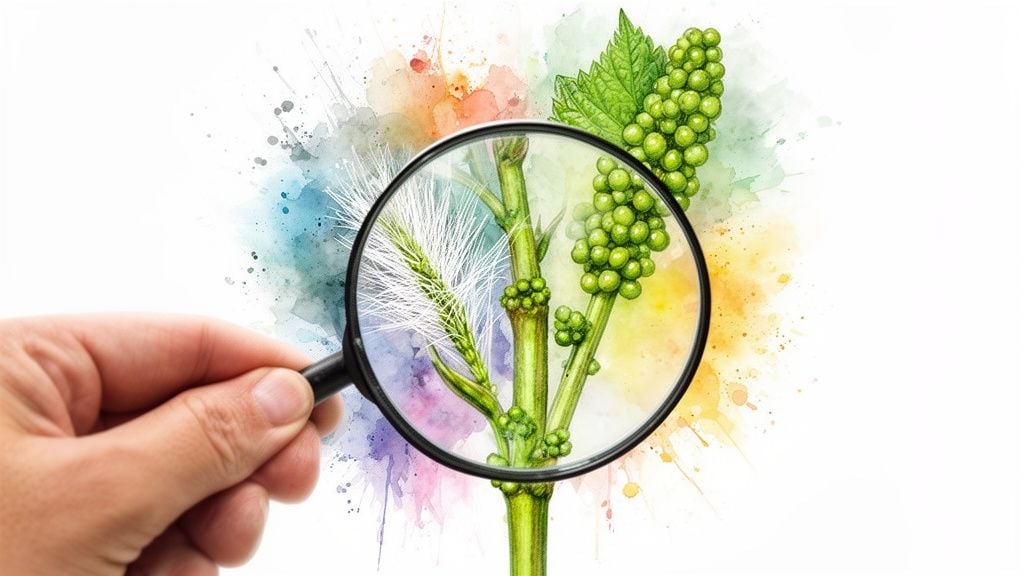
The very first hint you’ll get that a plant is “herming out” is the sight of little male parts showing up where they don’t belong. You might see small, round male pollen sacs forming at the plant’s nodes, or you might spot tiny, yellow, banana-shaped stamens—what growers call ‘nanners’—poking right out of the female buds.
These are the plant’s last-ditch effort to pollinate itself, and they usually pop up during the pre-flower or early flowering stages. Catching them early is everything. If you don’t, you risk your entire crop getting seeded, which tanks its potency.
Your First Guide to Identifying a Hermaphrodite Plant
When you’re growing cannabis, you’re almost always chasing sinsemilla—that top-shelf, seedless female flower packed with cannabinoids. A hermaphrodite, or “hermie,” is the ultimate wrench in the works because it grows both female buds and male pollen organs on the same plant.
Think of it as the plant’s survival instinct going into overdrive. If it feels stressed out or just has bad genetics, it might try to reproduce all by itself to make sure its genes get passed on.
This is a huge headache for any grower. As soon as that pollen gets loose, it can fertilize every female plant in your tent or garden. Once pollinated, a female plant stops putting its energy into making THC and other good stuff and starts making seeds instead. What you’re left with is a harvest that’s way less potent, smaller in yield, and full of crunchy, unwanted seeds.
Key Visual Clues to Watch For
Catching a hermie before it causes trouble is your number one defense. You absolutely have to get in there and inspect your plants daily, especially right after you flip them to a 12/12 light cycle for flowering.
Here’s what you need to train your eyes to spot:
- Pollen Sacs: This is the classic sign. Look for tiny, smooth green balls that look like a little bunch of grapes. You’ll find them at the nodes, which is the junction where a branch grows out from the main stem.
- “Nanners”: These are sneakier. They’re little yellow, banana-shaped growths that poke right out from the middle of a female bud. They can show up later in flower and are ready to drop pollen almost as soon as you see them.
A single hermie plant can pollinate an entire crop, effectively undoing months of hard work. The difference between a premium harvest and a seeded one often comes down to early and accurate identification.
To make spotting these signs easier, here’s a quick guide summarizing what to look for at a glance.
Quick Reference Guide to Hermie Plant Signs
This table breaks down the most common signs of a hermie, helping you know what to look for and when it’s most likely to appear.
| Visual Sign | Typical Appearance Stage | What to Look For | Common Location |
|---|---|---|---|
| Pollen Sacs | Pre-flower / Early Flowering | Small, smooth, round green balls, often in clusters. | At the nodes, where branches meet the main stem. |
| “Nanners” | Mid-to-Late Flowering | Bright yellow, curved, banana-shaped growths. | Emerging directly from inside the female buds. |
Keep this cheat sheet handy, and you’ll be in a much better position to protect your harvest from accidental pollination.
Finding Pollen Sacs at the Nodes
The classic, tell-tale sign of a hermie is the growth of male pollen sacs. Finding these on a plant you expected to be female is the first major red flag. Your most important job during early flower is to get really good at spotting them before they have a chance to mature and burst.
These rogue sacs almost always pop up at the plant’s nodes—that’s the junction where a branch meets the main stem. It’s the exact same spot you look for the first wispy white pistils that tell you a plant is female. On a hermie, you’ll often see both male and female parts fighting for the same real estate.
Sacs vs. Calyxes: What’s the Difference?
At a quick glance, a new grower might confuse a pollen sac with a female calyx, which is the little pod that the pistils grow out of. But once you know what to look for, the difference is night and day.
A healthy female calyx looks like a tiny, pointed green teardrop. A male pollen sac, on the other hand, is much rounder and smoother, and it often grows in little bunches. The best way to picture it is to imagine tiny, smooth green grapes showing up where you should only be seeing female pre-flowers. That “bunch of grapes” look is a dead giveaway you’re dealing with male parts.
Key Takeaway: Female calyxes are teardrop-shaped and usually have white “hairs” (pistils) coming out. Male pollen sacs are round, smooth, and often clustered together with no pistils in sight.
Spotting these early signs can mean the difference between a great harvest and a grow full of seeds. These little sacs usually appear during the pre-flowering stage, around weeks three to six. Some studies show that daily checks during this time can help you catch about 80% of potential hermies before they release any pollen. If you miss them, they can self-pollinate the whole tent, leading to a drop in THC of up to 30% in your buds. You can learn more about how to spot hermaphrodite cannabis fast and save your grow.
When and Where to Look
The most critical time to be on high alert is during pre-flower and the first few weeks of true flowering. This is typically the first two to three weeks after you flip your lights to a 12/12 schedule. The plant is declaring its sex during this period, so any hermaphroditic traits will start to show.
Get into a simple, consistent routine for your inspections.
- Start from the Bottom: Begin your search at the lowest branches and work your way up the plant. The lower nodes are often the first place stress-induced hermies show up.
- Get a Good Look: Gently tuck fan leaves aside so you have a clear, direct view of every single node. Don’t be shy—get in there.
- Magnify Your View: A jeweler’s loupe or even a basic magnifying glass is a grower’s best friend. It takes all the guesswork out of identifying the shape and structure of new growth.
- Check Every Day: Make this inspection part of your daily ritual. Pollen sacs can appear and develop fast, and catching them within a day or two is crucial.
By making these daily checks a habit, you can catch these sacs long before they mature. A mature pollen sac will eventually crack open and release a fine, yellow dust—the pollen—that will float through the air and pollinate every female flower it touches. Your vigilance is the only thing protecting your crop from that disaster.
Spotting “Nanners” Hiding in Your Buds
While round pollen sacs are a dead giveaway for a hermie, there’s a sneakier male flower that can pop up much later in the game. Growers almost always call them “nanners” because, well, they look like tiny yellow bananas.
Unlike pollen sacs, which are little green balls that have to ripen and burst, nanners are fully exposed male stamens. They poke right out from inside the female buds, which makes them way more of a threat. A plant often pushes them out as a last-ditch effort to reproduce under stress, and they can be ready to drop pollen almost immediately.
Finding nanners requires a whole new level of watchfulness, especially as you get close to harvest. They are easily one of the most frustrating signs of a hermie, appearing right when you think you’re home free.
Nanners vs. Pistils: Telling Them Apart
At first glance, you might see a new yellow growth inside a big, frosty cola and not think much of it. It’s shockingly easy to mistake a nanner for a pistil that’s just aging naturally. But once you know what you’re looking for, the difference is night and day.
- Pistils: These are the thin, wispy hairs that tell you a flower is female. They start out white and then slowly turn orange, red, or brown as the plant matures.
- Nanners: These are thicker, have a solid banana-like curve, and are a bright, unmistakable yellow. They look like tiny bananas, either solo or in a small bunch, sticking out from the bud.
The key difference is shape and color. Pistils are slender hairs that darken with age, while nanners are plump, curved, and bright yellow from the moment they appear.
This is a critical distinction to make. Ignoring those little yellow bananas for just 48 hours can be enough for them to pollinate nearby females. This type of hermie pollination can slash your final yield by 40-60% and cause THC content in affected buds to drop from a potential 25% to under 15%.
How to Inspect Your Buds for Nanners
You have to get up close and personal to find nanners, especially from the midpoint of flowering onward. They love to hide deep inside your biggest, densest colas, so a quick visual scan from the tent door just won’t cut it.
Here’s a simple routine to make part of your day:
- Grab a Magnifier: A jeweler’s loupe is your best friend here. A digital microscope works great, too. These tools let you zoom right in and leave no doubt about what you’re seeing.
- Gently Part the Buds: With clean hands or gloves, carefully pull the buds open just enough to see inside. Nanners love to form deep within the flower structure, so that’s where you need to look.
- Check High and Low: Don’t just focus on the giant main colas up top. Stress can cause nanners to appear on the smaller, lower buds, too. Check everything.
- Inspect More Often: As harvest day gets closer, ramp up your inspections. What was a check-in every few days should become a daily ritual. A nanner can show up and do its damage in an incredibly short amount of time.
Staying vigilant during these final weeks can be the one thing that separates a fantastic harvest from a seedy, disappointing one. Learning to spot these hidden threats is a vital skill for any grower who wants a top-shelf, seed-free crop and is a key part of mastering the cannabis flowering stage.
Why Do Cannabis Plants Turn into Hermies?
So, you know what a hermie looks like. Now for the million-dollar question: why does it happen? Plants don’t just randomly sprout pollen sacs or “nanners” for fun. It’s a survival mechanism, and it almost always boils down to one of two things: genetics or stress.
Think of it this way. Some plants are just wired from the start to be unstable, carrying the hermie trait in their DNA. Others are solid female plants that get pushed into a panic by a rough growing environment. Figuring out which one you’re dealing with is the first step toward preventing it from happening again.
The Role of Plant Genetics
The most straightforward cause is simply bad genetics. Just like some people are naturally more prone to certain health issues, some cannabis strains are genetically predisposed to developing both male and female flowers. This usually happens when a breeder uses an unreliable parent—maybe even a hermie itself—and passes that instability down to the seeds.
This is exactly why choosing a reputable seed bank is so crucial. Good breeders work for years to stabilize their genetics, ensuring their feminized seeds grow into true female plants without any surprises. If you grab seeds from a questionable source, you’re rolling the dice on whether your plant was destined to hermie from day one.
A plant’s genetic code is its blueprint for life. If the instructions to become a hermie are already written in that code, even the most perfect environment might not be enough to stop it.
How Environmental Stress Triggers Hermaphroditism
The second—and much more common—cause is plain old environmental stress. This is what happens when a genetically stable female plant gets pushed so far out of its comfort zone that it flips a survival switch. It senses danger and, in a last-ditch effort to reproduce, it tries to pollinate itself to create seeds for the next generation. It’s a desperate move to ensure its lineage continues, even if it ruins your current harvest.
This isn’t a conscious decision, of course. It’s a hormonal response to chaos. When a plant gets hit with major stress, especially during the delicate flowering stage, its internal chemistry can go haywire, triggering the growth of male parts. Learning to spot and eliminate these stressors is one of the most powerful skills a grower can develop.
For instance, major stress from pH imbalances (getting below 5.8 or creeping above 6.5) or a bad pest infestation can trigger hermaphroditism in up to 25% of the plants in a grow. For indoor growers, catching these issues early is everything. Diligent, regular checks of the plant nodes are known to prevent an estimated 90% of crop-wide pollination disasters.
Common Stress Triggers That Cause Hermies
At the end of the day, your job is to create an environment so chill and stable that your plants never have a reason to panic. Here are the most common culprits that can trick a perfectly good female plant into turning hermie.
The table below breaks down the primary environmental triggers that can cause a plant to go hermie, what those problems look like in your grow space, and most importantly, how to stop them before they start.
| Stress Factor | What It Looks Like | How to Prevent It |
|---|---|---|
| Light Leaks | Light seeping into the grow space from zippers, vents, or outside the room during the dark cycle. | Check your tent for light leaks before you start. Cover any indicator lights on equipment (power strips, fans) with black tape. Ensure the room is pitch-black when lights are off. |
| Temperature Extremes | Temperatures soaring above 86°F or dropping too low at night. Drastic, rapid temperature swings. | Use a reliable thermostat and fans for air circulation. Consider an AC or heater to maintain a stable range. Avoid placing your tent in an area with poor insulation. |
| Nutrient & pH Issues | Burnt leaf tips (nute burn), yellowing leaves (deficiency), or stunted growth. | Follow a consistent feeding schedule and don’t overdo it. Regularly test the pH of your water and runoff, aiming for your medium’s sweet spot. |
| Physical Damage | Broken branches from aggressive training, major pest damage, or accidental snapping of stems. | Be gentle during training, especially in flower. Support heavy branches with stakes or a trellis. Implement integrated pest management to keep bugs at bay. |
| Root Problems | Wilting or drooping even after watering (root rot), slow growth, or visible roots circling the pot. | Water only when the top inch or two of soil is dry. Use fabric pots for better aeration. Transplant to a larger container before the plant becomes root-bound. |
By keeping a close eye on these factors, you can create a stress-free zone where your female plants can focus on what they do best: producing a fantastic, seed-free harvest.
What to Do When You Find a Hermie Plant
Spotting the first signs of a hermie can feel like a punch to the gut, especially after you’ve poured weeks of care into your garden. But don’t panic. A quick, calm response can often save your harvest from turning into a seedy mess.
The very first thing to do isn’t to rip the plant out. Instead, take a breath and play detective. Is it just a few rogue pollen sacs on a lower branch, or are they popping up all over? A couple of sacs is a totally different ballgame than a plant covered in them. Your next move depends entirely on that initial diagnosis.
Step 1: Assess the Severity
Before you make any sudden moves, grab a magnifying glass and get up close and personal with the plant in question—and its neighbors. You’re trying to answer one crucial question: is this a small, contained problem or a full-blown emergency?
-
Minor Issue: This usually looks like just one or two pollen sacs on a single branch. It’s often the plant’s reaction to a specific, localized stressor, like a branch getting accidentally snapped or sitting too close to a hot light.
-
Major Issue: This is when you find pollen sacs or “nanners” scattered across multiple branches and nodes. It points to a much bigger problem, most likely bad genetics or a major environmental stress that has pushed the whole plant over the edge.
Your immediate goal is containment. A single pollen sac can burst open and release millions of pollen grains. It only takes one of those grains to fertilize a female flower and kickstart seed production.
Step 2: Decide Whether to Remove or Pluck
Okay, you’ve sized up the situation. Now it’s decision time. What you do next depends on how bad the problem is and how far along you are in the flowering cycle. This is where you have to choose between careful surgery and total removal.
When to Pluck the Pollen Sacs
If you’ve only found a few stray pollen sacs, you might be able to save the plant. This approach works best for plants in the early-to-mid flowering stage where the issue is clearly localized. It takes a watchful eye, but it can salvage your hard work.
- Turn Off All Fans: Before you even touch the plant, kill the air circulation. The last thing you want is to blow stray pollen all over your grow room.
- Mist the Area: Gently spray the pollen sacs and the surrounding plant matter with water. This makes the pollen wet and heavy, so it can’t go airborne.
- Sterilize Your Tools: Grab a pair of clean tweezers or small, sharp scissors. A quick wipe with rubbing alcohol will do the trick.
- Carefully Pluck: Gently but firmly remove the male parts, being careful not to pop them open. Drop them straight into a sealed bag for disposal.
- Monitor Daily: This isn’t a one-and-done fix. You have to check this plant every single day for the rest of its life. More sacs will probably show up, and you need to catch them immediately.
When to Remove the Entire Plant
This is the call no grower wants to make, but sometimes it’s the only smart move. Sacrificing one plant to save an entire crop is always the right play.
You should pull the plant immediately if:
- You see pollen sacs on multiple branches.
- You spot any “nanners,” which can drop pollen almost instantly.
- You find sacs that have already burst open (the damage is done).
- The plant is a strain you know is genetically prone to hermaphroditism.
If you have to remove it, do it with extreme care. Gently slide a large trash bag over the entire plant before you even start to move it. This traps any loose pollen. Then, carry it out of your grow space as smoothly as possible, far away from any other plants.
How to Prevent Hermies in Future Grows

Once you’ve had to deal with a hermie, the first thing on your mind is making sure it never happens again. The absolute best strategy is prevention. If you can build a stable, stress-free environment right from the start, you can stop hermaphroditism in its tracks.
Think of it this way: your goal is to make your plants so comfortable they never feel the need to panic and self-pollinate. This all comes down to dialing in your grow room, sticking to a solid routine, and, most importantly, starting with great genetics. A little foresight goes a very long way toward a clean, seed-free harvest.
Start with Stable Genetics
Your first line of defense, always, is the quality of the seeds you pop. The simple truth is that some strains are just genetically prone to turning hermie, meaning even a little bit of stress can flip them. Buying your seeds from a trusted breeder who makes stability a top priority is the single most important step you can take.
Good breeders spend years stress-testing and refining their genetics to make sure their feminized seeds grow into reliable female plants without any unwanted surprises. While no plant is 100% bulletproof against extreme stress, starting with a solid genetic foundation drastically cuts down your risk from day one. It’s an investment that saves you the heartache of spotting the early signs of a hermie plant down the road.
A perfect environment can’t always fix bad genetics. Do yourself a favor and choose seeds from breeders known for their stable, stress-resistant strains. It gives you the best possible shot at success.
Build a Stress-Proof Environment
After you’ve got quality genetics, the rest is in your hands. A consistent, stable environment is what keeps your plants happy and focused on what you want them to do: grow killer buds, not pollen sacs.
Here’s a simple checklist of the most critical factors to get right.
- Perfect Your Light Cycle: Light leaks during the dark period are probably the number one cause of hermies. Your grow space needs to be completely, absolutely pitch-black when the lights are off. Put your lights on a reliable timer and double-check your tent for any pinholes or light seeping in around zippers.
- Maintain Consistent Temperatures: Wild temperature swings are a huge stressor. Cannabis plants do best in a steady climate, ideally somewhere between 70-85°F (20-30°C). Use fans, heaters, or an AC unit to keep that temperature locked in.
- Establish a Routine: Your plants are creatures of habit. Water and feed them on a predictable schedule. Avoid the common mistakes of overwatering or letting them get bone dry, as both cause massive stress to the roots.
- Be Gentle with Training: High-stress and low-stress training can seriously boost your yields, but being too aggressive can physically damage a plant and trigger its survival instincts. Go easy, especially after you’ve flipped to flower.
Mastering these basics creates a garden where your plants can truly thrive without the pressure that so often leads to hermaphroditism. For more in-depth advice on setting up your grow for success from the very beginning, take a look at our complete growing guide.
Ready to start your next grow with genetics you can count on? At Liberty Seed Bank, we specialize in stable, high-quality feminized and autoflower seeds to help you get a successful, hermie-free harvest. Explore our collection and find the perfect strain for your garden today.
FAQs
Do Autoflowers Turn Hermie More Than Other Plants?
Not necessarily. Autoflowers aren’t naturally more likely to become hermaphrodites than their photoperiod cousins. The risk comes down to two things: genetics and stress.
The real issue is that autos are on a tight, fixed schedule from seed to harvest. They have no time to bounce back from mistakes like overwatering, nutrient burn, or heat stress. That pressure makes it easier to trigger a hermie response. With autos, starting with stable seeds from a trusted breeder is absolutely non-negotiable.
What’s the Difference Between a True Hermie and a Plant with “Nanners”?
Good question, as they look a bit different. A “true” hermie is a plant that was genetically predisposed to be both male and female from the get-go. You’ll usually see both male pollen sacs and female pistils developing at the same time, often early on.
A plant that throws “nanners” (small, yellow, banana-shaped growths) late in the flowering stage is a different beast. This is usually a female plant’s last-ditch effort to reproduce before it dies, often triggered by stress or simply old age. While both can ruin your crop with pollen, nanners are typically a response to a problem, not a sign of inherently bad genetics.
Can I Still Smoke the Buds from a Hermie?
The short answer is yes, but you probably won’t want to. Once a plant pollinates itself, it pours all its energy into making seeds, not potent cannabinoids. This means the buds will be weak, full of seeds, and deliver a harsh, unpleasant smoke.
Any parts of the plant that didn’t get pollinated are technically fine, but the overall harvest from a hermie is almost always a major letdown compared to what you’d get from a healthy female.


No Comments