

Growing the Pink Runtz Strain: The Ultimate Guide
Why Grow Pink Runtz?

- Top-Tier Genetics: A powerhouse cross of the Runtz family (Zkittlez x Gelato).
- Aesthetic Brilliance: Known for producing vibrant pink and purple hues under the right conditions.
- Market Demand: One of the most sought-after profiles for flavor-chasers and connoisseurs alike.
Note from the Grow Room: Pink Runtz is a rewarding challenge to grow. It’s not just about letting the plant grow; it’s about dialing in the environment to let those specific candy-coated traits truly shine.
You can pick up Pink Runtz seeds right here at Liberty Seed Bank.


Genetics and Lineage of Pink Runtz
The story of Pink Runtz begins with the legendary Cookies Fam and the cultural influence of Berner, whose branding and breeding selections helped push exotic cannabis genetics into the global spotlight. This cultivar isn’t just a random hybrid; it represents a masterclass in modern breeding, specifically designed for those who prioritize flavor and shelf appeal.
At its core, the pink runtz lineage is a power-coupling of two heavy hitters: Zkittlez and Gelato. As a premier zkittlez gelato cross strain, Pink Runtz inherits a complex terpene profile and a robust growth habit from its parents. While the original Runtz took the world by storm, Pink Runtz emerged as a standout phenotype known for its distinct color and amplified sweetness.
Understanding Runtz Phenotype Variations
In the world of high-end cannabis, runtz phenotype variations are common; you’ll frequently hear Runtz this, Runtz that at just about any dispensary you walk into. However, Pink Runtz is often characterized by its specific morphological leanings:
- Zkittlez Influence: Contributes the intense, candy-like “tropical” sweetness and a more uplifting, euphoric lean.
- Gelato Influence: Provides the creamy undertones, dense bud structure, and the potential for deep purple hues.
Every phenotype influences flavor and color differently. When you are hunting for the perfect Pink Runtz mother plant, look for the individuals that exhibit the most intense pinkish-purple pistils and the “froot loop” aroma early in the flowering stage.
This genetic foundation is exactly why it remains a top choice for growers. You aren’t just growing a plant; you’re cultivating a piece of modern cannabis history that continues to define the “Top Shelf” category.
Flowering Time and Yield Expectations
If you’re growing Pink Runtz, you’re likely chasing that top-shelf quality, but let’s talk numbers—because at the end of the day, you want to know what’s actually going to end up in your jars. This strain isn’t a “mega-yielder” like some commercial big-bud cultivars, but for an exotic hybrid, it holds its own remarkably well.
The pink runtz flowering time weeks usually land between 8 and 10 weeks. Most growers find that 63 to 65 days is the sweet spot where the terpene profile is screaming and the trichomes indicate harvest readiness with that perfect milky-to-amber transition.
Indoor vs. Outdoor Yields
When you’re dialed in, an indoor cannabis yield typically hits around 350 to 450 grams per square meter. This depends heavily on your light intensity and how well you manage your canopy. Since Pink Runtz produces such dense buds, the weight can be deceptive—the flowers might look medium-sized, but they are heavy, resin-packed “golf balls” that really move the needle on the scale.
If you decide to take things outside, you can expect a bit more bulk. In a sunny, Mediterranean-style climate, an outdoor cannabis yield can reach 16 to 18 ounces per plant. Just keep in mind that yield depends on environment and care; if the plant gets shaded out or hit with a nutrient lockout, those numbers will dip quickly.
Quality Over Quantity
It’s important to remember that with a strain like this, “bag appeal” is the real metric of success. You’re looking for that specific pink runtz harvest readiness where the buds are rock-hard and dripping in resin. Pushing for a massive yield by over-bulking with synthetic boosters can sometimes wash out the delicate sweet candy terpene profile that makes Pink Runtz famous in the first place.
Most veteran growers agree: it’s better to harvest 14 ounces of “A-grade” exotic flower than 20 ounces of airy, mid-grade buds. If you focus on plant health and light penetration, the weight will follow naturally.
Key Characteristics of Pink Runtz Plants
If you’ve ever walked into a grow room and seen a plant that looks like it belongs in a candy shop rather than a garden, you’ve probably met Pink Runtz. The pink runtz plant structure is pretty classic for a hybrid, but it’s the visuals that really stop you in your tracks. We’re talking about cannabis plant morphology indica hybrid traits—sturdy, manageable, and not too stretchy, but with a personality all its own.
The real magic happens once you hit the home stretch of flowering. This strain is famous for producing seriously dense buds colorful cannabis enthusiasts go crazy for. You aren’t just getting green flowers here; as the plant matures, anthocyanins create purple coloration that can range from a light lilac to a deep, moody plum.
What to Look For in Your Grow
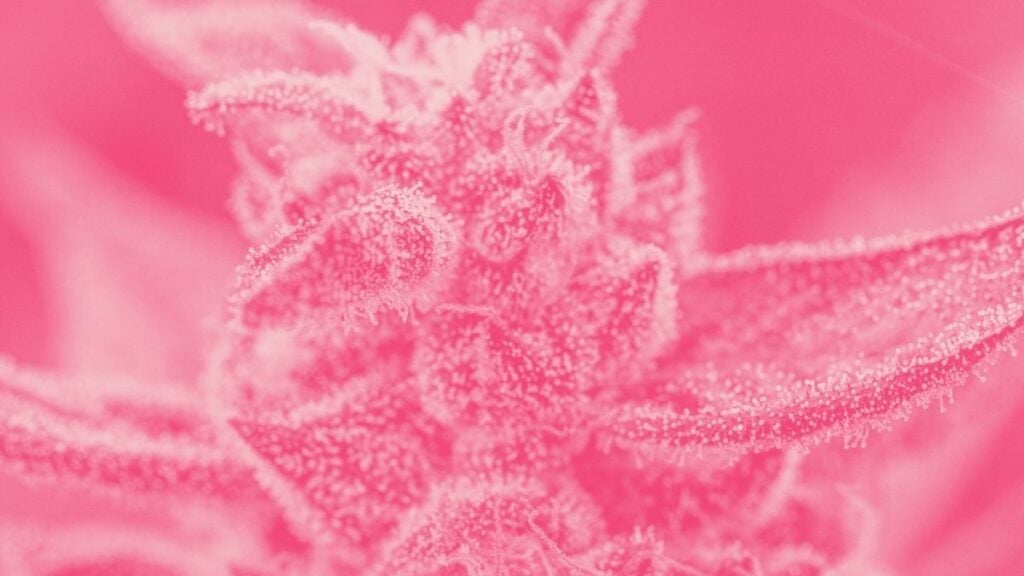
The Frost Factor: These buds are covered in trichomes so thick it looks like they’ve been rolled in sugar. Even the “sugar leaves” get coated, making it a dream for anyone into extracts.
The Structure: Expect a bushy, medium-sized plant. It’s not going to hit the ceiling like a pure Sativa, but it definitely packs on the weight in all the right places.
Color Transitions: Keep an eye out for those purple hues and trichome coverage to start popping off in the last few weeks. It’s a literal glow-up.
If you want those colors to really “pop,” dropping your temps slightly during the dark cycle in late bloom can help those purples and pinks show out even more.
The dense buds are the prize here, but the way the whole plant carries itself—sturdy, frosty, and vibrant—is what makes it a staple in any serious grower’s rotation.
Ideal Growing Environment for Pink Runtz
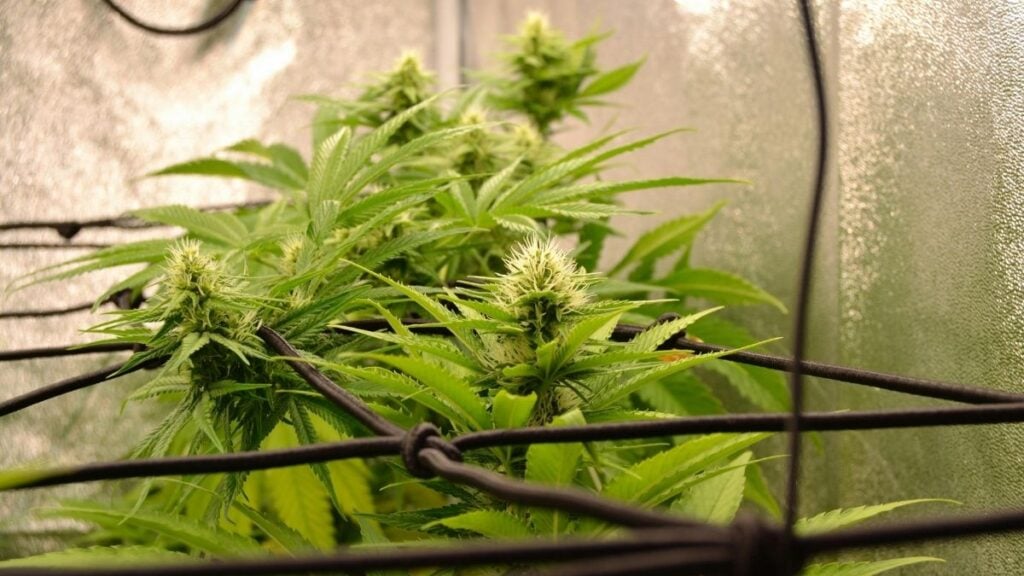
If you want to see those legendary colors and smell that candy shop aroma, you have to nail the environment. While it’s a hardy hybrid, Pink Runtz is a bit of a “Goldilocks” plant—it doesn’t like things too hot or too humid. To get the best results, you’re essentially trying to mimic a perfect mediterranean climate cannabis loves, but with a bit more precision. When weighing the indoor vs outdoor cannabis growing debate, most pros lean toward an indoor setup for this one because you have total control. This strain is all about those delicate terpenes and colors, and a random heatwave or a week of rain can wash all that hard work away.
Dialing in the vitals starts with keeping your daytime temperatures in the 70–80°F sweet spot. If it gets much hotter, you risk “burning off” those precious terpenes that give Pink Runtz its name. Humidity is another area where a lot of growers trip up. While it likes a bit of moisture early on, you absolutely must drop your humidity as those dense buds start stacking. High humidity affects mold risk, and because Pink Runtz buds are so tight and thick, they are prime targets for bud rot if the air is stagnant.
Toward the end of the flower cycle, you can use a specific temperature trick to really make the plant shine. Dropping your nighttime temps by about 10–15°F mimics a fall chill, which influences terpene production and signals the plant to start pumping out those deep purples and pinks. In a best climate for runtz strains, you want consistent, intense light without the scorching heat. Whether you’re balancing your temperature humidity cannabis grow specs indoors or finding a spot with maximum sun exposure and airflow outdoors, ensuring the plant never feels stressed is the goal. Think of your grow room like a high-end spa; if the air feels “heavy” or “stuffy” to you, it’s definitely too humid for a Pink Runtz in mid-bloom.
Indoor Growing Setup for Pink Runtz
If you’re setting up inside, your light choice is the single most important piece of gear you’ll buy. These days, LED grow lights are the gold standard for a reason. Older HPS lights throw off a ton of heat that can literally cook the “candy” right out of your Pink Runtz, but modern LEDs give you that intense light without the massive heat spikes.
To really get this strain to show off, you want a full-spectrum LED. In the vegetative stage, your led grow light schedule should be a consistent 18 hours on and 6 hours off. During this time, the blue wavelengths in the light help keep the plant squat and bushy, which is exactly what you want before the flowers start stacking. Once you flip to the 12/12 flowering cycle, the red and far-red spectrums take over to drive bud production.
Pushing the Potential with PPFD and DLI
If you really want to talk shop, you need to look at your light intensity, measured in PPFD (Photosynthetic Photon Flux Density). For Pink Runtz, you’re aiming for about 300–500 µmol/m²/s in the vegetative phase. Once you hit peak flower, you can push that up to 700–900 µmol/m²/s. Pushing your light levels this high helps with indoor cannabis yield optimization, but you have to be careful—if you go too hard without adding CO2, you’ll just stress the plant out.
Airflow and Environment Control
Because Pink Runtz produces such dense buds, a solid ventilation carbon filter setup isn’t just about hiding the smell—it’s about survival. You need constant airflow moving through the canopy to prevent pockets of stagnant, humid air from settling on your flowers. A good grow tent setup cannabis needs at least one or two oscillating fans and a strong exhaust system. If the air stays moving, you’re much less likely to deal with the heartbreak of bud rot right before harvest.
Setting up your indoor cannabis yield optimization strategy this way ensures that your Pink Runtz has the structural support and the “breathing room” it needs to reach its full potential.
Outdoor Cultivation Tips for Pink Runtz
Growing Pink Runtz under the open sky is a completely different game than the controlled environment of a tent. If you’re going this route, your biggest partner and your biggest challenge is the sun itself. Outdoor cannabis growing tips usually start with one thing: timing. Because this is a photoperiod strain, sunlight drives photosynthesis and dictates exactly when the plant moves from stacking leaves to stacking buds. You want to get your clones or seedlings in the ground as soon as the danger of frost has passed, usually in late spring, to give them a long enough vegetative season to build a sturdy frame.
The best planting time cannabis growers aim for ensures the plant is large enough to handle the intense transition to flowering once the days start shortening in mid-summer. Sunlight exposure cannabis plants receive should be at least six to eight hours of direct, unobstructed light. If you can find a spot with a slight breeze, even better, as seasonal timing impacts yield size and plant health. In an outdoor setting, outdoor plants are exposed to pests and weather that you just don’t see indoors. You’ll need a solid pest control outdoor grow strategy, like using neem oil or beneficial insects early on, because once those sticky Pink Runtz buds start forming, you can’t just spray them down with chemicals.
As you get into the late summer and early fall, the weather becomes your primary concern. Since Pink Runtz has such tight, dense flower clusters, a heavy autumn rain can be a recipe for disaster. If you live in a climate that gets “soupy” or wet in September and October, you might even consider a simple greenhouse or a temporary clear cover. This helps keep the moisture off the resin while still letting that vital spectrum through. Managing these outdoor cannabis growing tips properly is the difference between a harvest that smells like candy and one that ends up in the compost pile.
Soil, Nutrients, and Feeding Schedule
If you want those high-end results, you have to feed the beast. Pink Runtz is a hungry strain, but it’s also sensitive to overfeeding, so you’re looking for a “Goldilocks” approach to your cannabis soil mix nutrients. Most pros start with a high-quality organic soil buffered with coco coir or perlite for drainage. This ensures the roots can breathe while the organic vs synthetic nutrients you choose do the heavy lifting.
A solid feeding schedule cannabis plants thrive on is broken down by the plant’s life stage. In the beginning, your nitrogen supports vegetative growth, helping the plant build that green, leafy “solar panel” system it needs to power through flowering. As the plant transitions, you’ll shift the balance because phosphorus boosts flowering and potassium strengthens plant health, helping the stalks support those heavy, resinous buds.
N-P-K Ratios by Growth Stage
To keep things simple, here is a breakdown of the nitrogen, phosphorus, and potassium cannabis ratios you should aim for. Keep in mind these are ratios, not necessarily the exact percentages on the bottle:
| Growth Phase | Target N-P-K Ratio | Focus |
| Early Veg | 3-1-1 | Rapid leaf and stem development |
| Late Veg | 1-1-1 | Balanced growth before the flip |
| Early Flower | 1-3-2 | Shifting energy to bud sites |
| Mid-Late Flower | 0-3-3 | Maximum resin and terpene production |
While it’s tempting to go heavy on the nutrients to try and “force” bigger buds, Pink Runtz will tell you pretty quickly if you’ve overdone it. Watch for “burnt” leaf tips—that’s a classic sign of nutrient burn. During the final two weeks, most growers stop the nutrient cycle entirely and switch to plain, pH-balanced water. This “flush” allows the plant to consume its stored minerals, which is the secret to getting that smooth, clean-burning smoke and the purest sweet candy terpene flavor.



No Comments