

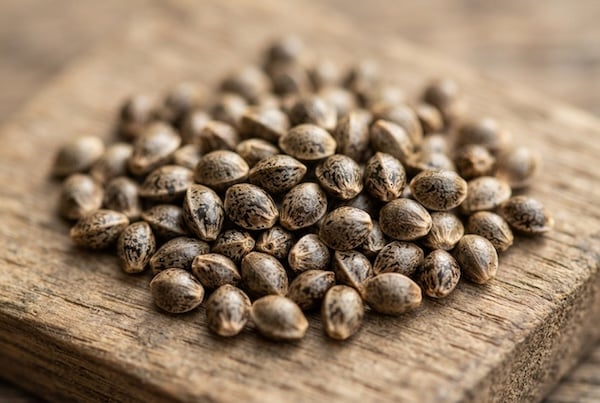
At one point or another, many growers will come across a forgotten packet of seeds. Whether sitting in a drawer for months or tucked away in a freezer, the first question that may come to mind is: How long do weed seeds last?
When kept in a cool, dry place, cannabis seed shelf life may be longer than you expect. Under ideal storage conditions, your seeds can last several years—or at the higher end of the spectrum, up to a decade (Small & Brookes, 2012).
In this guide, we’ll walk you through different ways to store cannabis seeds and the average lifespan for each. We’ll also explain what causes seeds to degrade in the first place, offer tips on extending their viability, and cover proper storage techniques.
How Long Do Marijuana Seeds Last?
Storage conditions have a tremendous influence on how long cannabis seeds can last. Lighting, moisture content, and temperature can all help determine how long a particular batch remains capable of germinating.
Research found substantial declines in germination rates when seeds were stored in warm, humid conditions. Cooler and drier environments, on the other hand, preserved their germination rates much more effectively (Small & Brookes, 2012). Genetics, seed maturity, and the way seeds are handled before they ever make it to your door also play an important role in their lifespan.
How Long Do Weed Seeds Last: A Comparison Table
Storage condition | Typical viable lifespan | Expected germination trend |
Loose in a warm, bright room | Up to 1.5 years | Declines relatively quickly |
Sealed in a dark, room-temperature space | ~1- 3 years | Gradual decline over time |
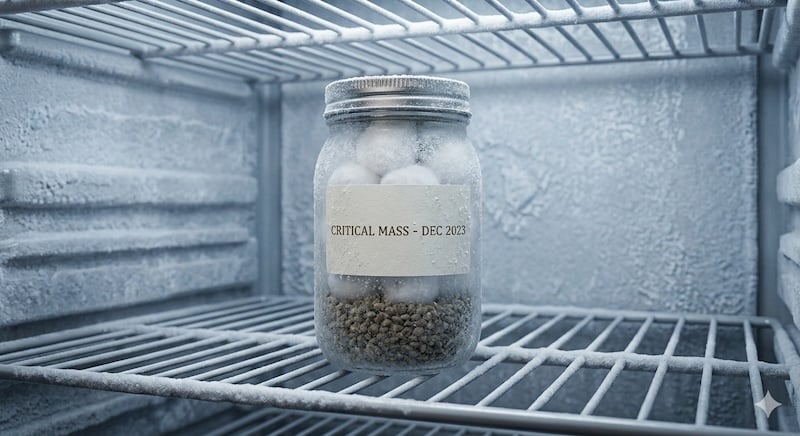
Fridge (roughly 34–40 °F/1–5 °C), sealed with desiccant | ~2- 5 years | Generally well maintained, with gradual decline |
Freezer (sealed, moisture-controlled) | ~5-10 years | Generally well maintained when seeds are sufficiently dry |
*The above-listed timeframes are general ranges.
Why do cannabis seeds last longer than other types of seeds?
The cannabis plant produces what botanists call orthodox seeds, which can tolerate drying and long-term storage without losing their ability to germinate. However, orthodox seeds aren’t exclusive to the cannabis plant by any means. They’re also present in lentils, carrots, and pepper, just to name a few. Recalcitrant seeds, such as those found in plants including avocado, cacao, and chestnut, cannot endure long-term storage and are damaged by drying (Berjak & Pammenter, 2008).
Researchers found that seeds stored at 41 degrees Fahrenheit or 5 degrees Celsius retained substantial germination capacity over a period of 66 months—or approximately 5.5 years. These findings suggest that seeds dried to approximately 6% moisture, when stored at −4 degrees Fahrenheit or -20 degrees Celsius, could maintain their viability for up to 10 years (Small & Brookes, 2012).
In another study, researchers tested seeds that were at least five years old from two cannabis cultivars. They soaked the seeds overnight in either a 1% hydrogen peroxide-and-water solution or sterile water. They replaced the liquid the following day and allowed them to soak for another three days. Afterward, approximately 50% of seeds in the hydrogen peroxide treatment germinated, compared to approximately 10% of seeds in the sterile-water control (Sorokin et al., 2021).
The bottom line: An older batch is not necessarily a lost cause. Under favorable conditions, properly stored cannabis seeds can remain viable for years, even if their germination rates aren’t what they once were.
What Affects Cannabis Seeds’ Shelf Life?
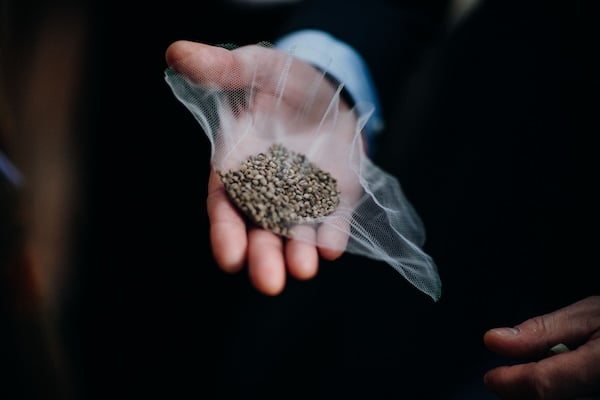
Several factors influence how long cannabis seeds remain viable. Some are determined before the seeds ever reach you, while others affect how quickly they deteriorate over time.
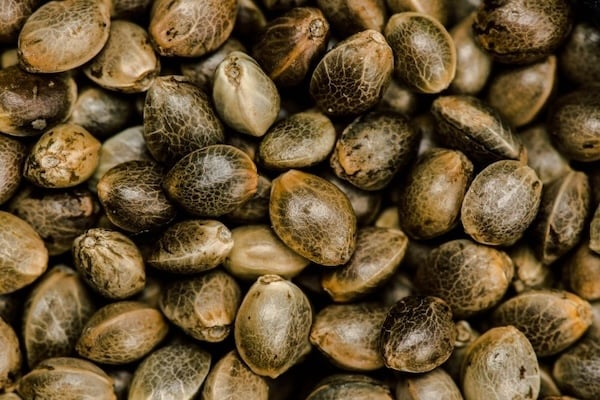
Maturity at harvest: Fully mature seeds generally have greater longevity than immature ones. This is because they’ve developed enough to support dormancy and germination. Mature cannabis seeds are typically dark and hard, sometimes with mottled or “tiger-striped” patterns. Underdeveloped seeds may be pale, greenish, small, soft, or easily crushed.
Moisture content: Moisture increases metabolic activity and can encourage mold and other forms of deterioration. Harrington’s general seed-storage rule states that, within a normal moisture range, each 1% decrease in seed moisture roughly doubles seed life (Harrington, 1972).
Temperature: Higher temperatures accelerate the chemical and metabolic processes that gradually break down a seed’s stored food reserves and damage its living tissues. In other words, heat typically makes seeds deteriorate faster. Cooler storage slows that process, helping seeds retain their ability to germinate for longer. As a general rule, lowering storage temperature by 5°C can roughly double seed life (Harrington, 1972).
Light and oxygen: Light and oxygen contribute to oxidation. This process includes the gradual deterioration of oils and other compounds within the seed. Over time, oxidative damage can reduce viability. Accordingly, it’s always best to tightly seal your seeds in a container, and keep them in a dark space.
Previous handling: A seed’s lifespan also depends on what happened before it reached you. How the breeder dried, stored, and shipped the seeds can affect their starting viability, which is why the freshness and handling practices of the seed bank or breeder matter when you buy them.
Do Cannabis Seeds Expire? How Germination Rates Drop as Weed Seeds Age
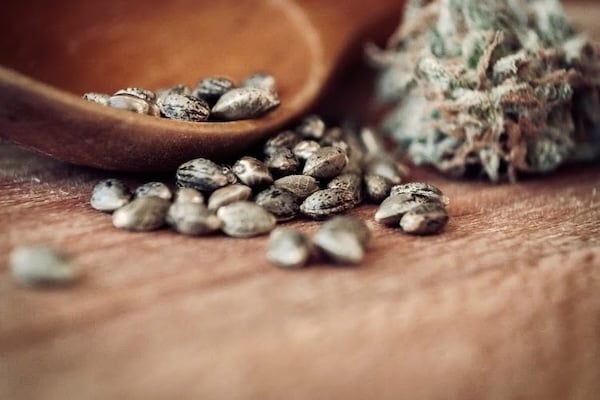
Unlike a piece of fruit that’s fine one day and inedible the next, cannabis seeds don’t have a clear expiration date. Instead, their germination rates gradually decline over time. This means that in any one group or packet, the share that sprouts will slowly go down. Research also shows that the rate of their decline isn’t necessarily fixed and can potentially accelerate later on after a long period of steady decline (De Vitis et al., 2020).
With older seeds, that decline can show up in a few ways. A seed may take longer than usual to produce a taproot, or it may fail to germinate altogether. Seeds that do sprout can sometimes produce weaker or abnormal seedlings, particularly when their viability has been compromised by poor storage.
The same basic aging process applies to feminized seeds and autoflower seeds. If you have a packet that has been sitting around for years, that does not necessarily mean the seeds are worthless. It simply means the outcome is less predictable, and you may need to germinate more than you would with fresh seeds.
Signs Your Seeds Are Past Their Prime
While cannabis seeds don’t expire, they can show visible signs that they may no longer be viable. When taking a look at your own packet, keep an eye out for:
- Cracked or crushed shells
- Pale green or white coloring, which can indicate immaturity
- Shells that feel soft or crumble when lightly pinched
- Mold or a musty smell
If you don’t know how old the seeds are or how they were stored, it can’t hurt to give them a try. Just know, going into the process, that the odds may be low, and that you may need to germinate extras.
Do good weed seeds float or sink?
One common myth says that if a seed floats, it’s dead. While floating can sometimes indicate an empty or poorly developed seed, it does not reliably predict whether a seed can germinate.
Healthy cannabis seeds can float initially because their shells trap air, while other viable seeds may sink right away. The seed’s ability to germinate can’t be determined reliably from whether it floats or sinks in water. If you’re testing older seeds, germination is a more useful measure of viability than the float test.
How to Get the Longest Life From Your Seeds
If you want your seeds to remain viable for as long as possible, the simplest approach is to avoid storing more than you realistically expect to use. Freshness also matters at the time of purchase, so look for a seed bank that offers a germination guarantee.
We recommend:
- Buying only what you’ll plant in the next season or two.
- Keeping seeds cool, dark, and dry.
- Seal them inside a container.
- Don’t repeatedly open and shut this container.
If you have seeds you’d like to save for the future, our cannabis seed storage guide can provide some additional pointers, including which containers to use, the pros and cons of fridge vs freezer storage, and how to tell upfront if your seeds are still good.
A Final Note
If you have an older packet of seeds tucked away, there’s no harm in giving them a try.
Seed viability does decline over time, but older seeds don’t necessarily stop germinating all at once. Still, if you’re planning ahead of time, know that fresh seeds are typically the safest choice.
Ready to start your next grow? Browse our full seed catalog or explore our best sellers.
If you’re a beginner looking to learn about the basics of cannabis cultivation, our growing guide will walk you through each stage of the growing process.
FAQs
How long do weed seeds last before they go bad?
Cannabis seeds don’t have a hard expiration date. Their viability gradually declines over time. When stored properly in a cool, dry, dark environment, they can remain viable for up to five years while still maintaining a high germination rate. Room-temperature storage is better suited to shorter-term storage, particularly when temperatures are stable.
How long do weed seeds last unplanted?
“Unplanted” essentially means seeds that are being kept in storage. Their shelf life depends on temperature, humidity, light, and exposure to air. Under proper long-term storage conditions, cannabis seeds can remain viable for up to five years with a high germination rate.
How long do marijuana seeds last in the freezer?
Freezing can extend the lifespan of cannabis seeds. However, the seeds still need to be properly dried and protected from moisture. Repeated temperature changes should also be avoided.
How long do weed seeds stay dormant?
How long do weed seeds stay dormant?
Dormancy and viability aren’t the same thing. A dormant seed is alive but waiting for the right conditions, such as moisture and warmth, to begin germinating. It can remain viable in storage as long as the embryo and its stored reserves remain intact, although viability gradually declines with age.
Do old weed seeds grow slower?
Do old weed seeds grow slower?
Older cannabis seeds can be harder to germinate because their shells may become tougher with age. The main concern with older seeds is reduced or slower germination rather than necessarily slower growth once a healthy seedling is established.
Are 10-year-old cannabis seeds still good?
Possibly, but don’t count on them. Properly stored seeds can remain viable for years, but germination rates generally decline with age. If you have 10-year-old cannabis seeds, test-germinate them before relying on them for a grow.
References
Small, E., & Brookes, B. (2012). Temperature and moisture content for storage maintenance of germination capacity of seeds of industrial hemp, marijuana, and ditchweed forms of Cannabis sativa. Journal of Natural Fibers, 9(4), 240–255. https://doi.org/10.1080/15440478.2012.737179
Berjak, P., & Pammenter, N. W. (2008). From Avicennia to Zizania: Seed recalcitrance in perspective. Annals of Botany, 101(2), 213–228. https://doi.org/10.1093/aob/mcm168
Sorokin, A., Yadav, N. S., Gaudet, D., & Kovalchuk, I. (2021). Development and standardization of rapid and efficient seed germination protocol for Cannabis sativa. Bio-protocol, 11(1), e3875. https://doi.org/10.21769/BioProtoc.3875
Harrington, J. F. (1972). Seed storage and longevity. In T. T. Kozlowski (Ed.), Seed biology: Vol. III. Insects, and seed collection, storage, testing, and certification (pp. 145–245). Academic Press. https://doi.org/10.1016/B978-0-12-395605-7.50009-0
De Vitis, M., Hay, F. R., Dickie, J. B., Trivedi, C., Choi, J., & Fiegener, R. (2020). Seed storage: Maintaining seed viability and vigor for restoration use. Restoration Ecology, 28(S3), S249–S255. https://doi.org/10.1111/rec.13174
Pepe, M., Hesami, M., & Jones, A. M. P. (2021). Machine learning-mediated development and optimization of disinfection protocol and scarification method for improved in vitro germination of cannabis seeds. Plants, 10(11), 2397.https://doi.org/10.3390/plants10112397
VanDerZanden, A. M. (2024, June). How hormones and growth regulators affect your plants. Oregon State University Extension Service. https://extension.oregonstate.edu/es/node/100636/printable/print


No Comments