

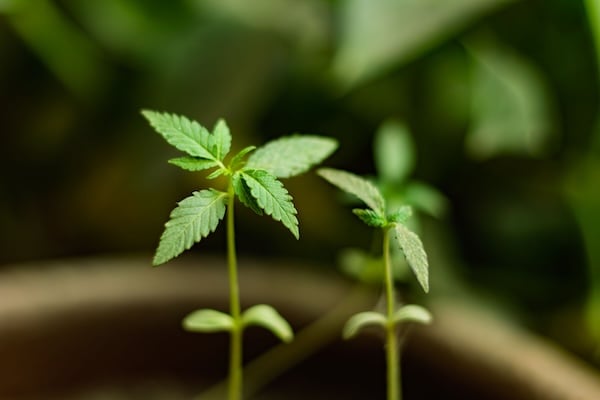
Your cannabis seed has cracked, and the taproot is in the soil. If you’re new to growing, you may find yourself wondering: What now? While the weeks following the appearance of a taproot can be an especially delicate period of the growing process, approaching this stage with the right tips can help you achieve a bountiful harvest later on.
Good cannabis seedling care comes down to understanding what your plants need and resisting the urge to overdo things. Once they’ve completed the germination process, new growers can sometimes take a “more is more” approach, with overwatering being an especially common mistake. Excess moisture can lead to a disease called “damping off,” which can kill seedlings before they have the chance to develop (Pundt, 2024). That said, challenges like this can be sidestepped easily once you know what to look for.
In this guide, you’ll learn how to light, feed, water, and transplant your seedlings. There are also tips for troubleshooting common issues and a day-by-day timeline that walks you through the seedling stage from start to finish.
What is the Cannabis Seedling Stage?
The cannabis seedling stage typically lasts 2-3 weeks and begins when the first round of cotyledons emerge. It typically ends when your seedling has developed three to five nodes with complex, multi-bladed fan leaves.
Growers actually break the seedling phase into three distinct substages:
- Early Sprout Stage (Days 1–7): The smooth, rounded cotyledons (“seed leaves”) emerge to provide essential nourishment during early growth. Underground, the main taproot anchors itself into the medium.
- True Leaf Development (Days 7–14): The plant grows its first true cannabis foliage. The first set of leaves has a single serrated blade, followed by a second set that usually features three leaflets (Hesami et al., 2023).
- Transition & Root-Bound Stage (Days 14–21): The leaves become increasingly complex, producing five or more blades per leaf. The root system fills out its starter container, signaling that the plant is ready to be transplanted into a larger pot for the vegetative phase.
The seedling stage is the second of four stages in a plant’s entire lifecycle:
- The Germination Stage
- The Seedling Stage
- The Vegetative Stage
- The Flowering Stage
Once the vegetative phase begins, you’ll see more vigorous development of your plants’ leaves, stems, and roots. Our vegetative stage and flowering stage guides also provide additional detail.
A Note for Autoflower Growers: If you’re cultivating an auto strain, we recommend paying particularly close attention to this early stage. While photoperiod plants can remain in the vegetative stage for longer periods of time, autoflowering cultivars will begin flowering at a specific age, regardless of the light schedule. If significant stress or challenges occur during the vegetative stage, your plants simply have less time to recover and resume their normal growth. This situation can potentially limit your plants’ final size and yield (University of Saskatchewan, n.d.).
Cannabis Seedlings Day by Day
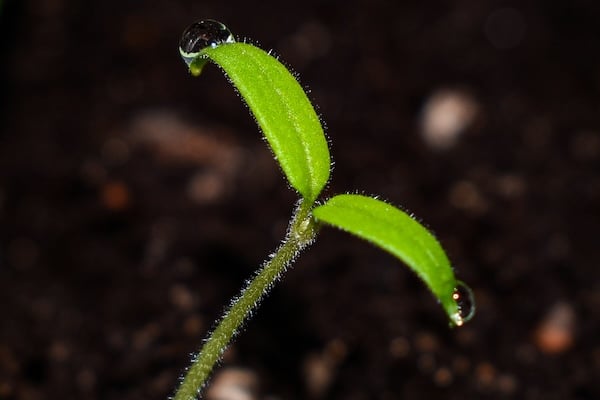
Image credit: Artem Makarov
| Days | What you’ll see | What to do | Common mistakes |
|---|---|---|---|
| Days 1–3 | The sprout breaks through the soil, and its two rounded cotyledons begin to open. Sometimes the seed shell stays stuck, creating a “helmet head.” | Keep conditions stable and the growing medium lightly moist. Give the seedling gentle light. If the shell sticks, allow time for it to loosen naturally. | Overwatering, exposing the sprout to harsh light, or pulling off a stubborn seed shell. |
| Days 4–7 | The first serrated true leaves emerge above the cotyledons. | Maintain consistent light and warmth. Water sparingly, allowing the root zone to get air between waterings. | Avoid adding nutrients too early or keeping the soil constantly wet. |
| Days 8–14 | Three-bladed leaves begin to appear, and the stem gradually thickens. This is often when you’ll have a 2-week-old cannabis seedling. | Watch for steady leaf development and upright growth. Check moisture before watering rather than following a rigid schedule. | Overwatering, overfeeding, or using overly intense light. |
| Days 15–21 | Five-bladed leaves may emerge, and roots may begin filling the starter cup. | Check the drainage holes and root development. Transplant if roots have filled the container and the plant is established. | Transplanting based on the calendar alone or waiting until roots become tightly crowded. |
The Ideal Environment for Healthy Cannabis Seedlings
Young seedlings need a stable environment while their roots develop. Keeping temperature, humidity, and airflow within a suitable range helps prevent stress and supports steady growth.
Temperature
Aim for 68–77°F (20–25°C) while the lights are on. Avoid cold floors, chilly windowsills, and drafts, which can expose seedlings to temperature fluctuations. A thermostatically controlled heat mat can warm the root zone in a cool space, but check the temperature to prevent overheating.
Humidity and VPD for Cannabis Seedlings
Aim for roughly 70–80% relative humidity during early growth. Marijuana seedlings have small root systems, so higher humidity helps limit moisture loss through their leaves. A VPD (vapor pressure deficit) of about 0.4–0.8 kPa is a useful starting range. VPD measures how strongly the air draws moisture from leaves; temperature and humidity work together to determine it (Vivosun, 2026).
A humidity dome or clear cup can help maintain moisture during the first week. Vent it daily, then gradually remove it as the seedling establishes. Avoid leaving the plant constantly enclosed in stagnant, saturated air, which can encourage disease.
Airflow
Use a gentle oscillating fan to keep air moving around the seedling, but don’t aim it directly at the plant. Light movement helps the stem strengthen without drying out delicate leaves or the growing medium too quickly.
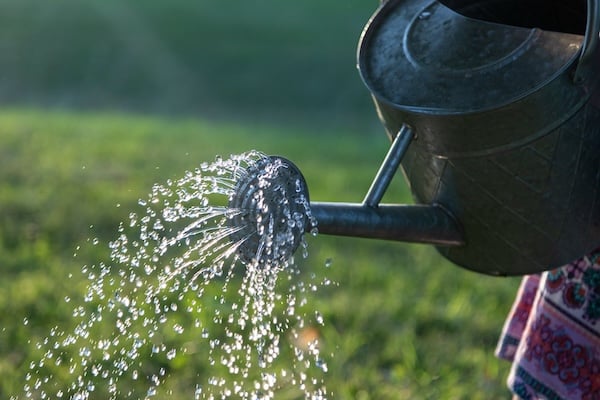
Image credit: David Ballew
How to Water Cannabis Seedlings Without Drowning Them
Your seedling has a tiny root system, so it needs much less water than a mature plant. Start with a few tablespoons around the stem, or use a spray bottle to moisten the immediate root zone rather than soaking the entire container.
This is especially important if you’re using a large container. Because a seedling’s roots only take up so much space, they can’t “reach” the majority of the soil in the larger pot. Waterlogged soil deprives a marijuana seedling of oxygen, which can stunt its growth.
To avoid this situation, we recommend using a small cup with drainage holes, rather than an oversized pot. If you’ve already planted your seedling in a larger pot, try watering in a small circle just around the seedling, leaving the outer perimeter dry. As the roots spread, gradually widen the circle so the surrounding soil becomes moist as the plant grows.
Signs of Overwatering
An overwatered cannabis seedling may have droopy, limp, or papery leaves. Before watering again, check the soil instead of following a fixed schedule. Soil that feels wet shouldn’t be watered again. If you lift the pot and it feels especially light, your plants may need a drink. Tactics like these can help you respond to what your plant actually needs.
The pH of your water matters, too, because it affects how easily your plant can absorb nutrients. Aim for a pH of 6.0–7.0 when growing in soil, or 5.5–6.5 in coco or hydroponic systems (University of Saskatchewan, n.d.). If your water needs adjusting, our guide to raising pH in water explains how. If you’d like to take a more in-depth look at the watering process, see our guide on how often to water weed plants.
Light for Cannabis Seedlings
Give your seedlings a steady start with 18 hours of light and six hours of darkness. The best setup will provide gentle, consistent illumination while avoiding excessive heat. Observing how your plants react is one of the best ways to gauge if your lighting is right. For instance, stems that grow tall and thin may not be receiving enough light. This can be corrected by moving the grow lamp closer, while being mindful of the manufacturer’s recommended distance. Conversely, if your plant’s upper leaves turn yellow or brown or have scorched areas, the light is probably too intense and should be moved further away.
A Note on Seedling Stretching: When a weed seedling stretches, it’s a sign your plant may be reaching for more light. Adjusting your light settings can prevent further stretch, although it won’t shorten a stem that’s already elongated. If you’re looking for in-depth guidance, we recommend taking a look at our grow lights guide.
Do Cannabis Seedlings Need Nutrients?
For the first one to two weeks, cannabis seedlings typically don’t require additional nutrients. Their cotyledons, or first seed leaves, supply stored energy, and many potting mixes already contain starter fertilizer (Boucher, 2026).
However, seedlings growing in coco, hydroponics, or other nutrient-free media may need a light nutrient solution once their true leaves appear. Nutrient products typically include a feeding chart on the packaging that specifies how many millilitres or grams to add per gallon of water to achieve the recommended electrical conductivity (EC) for each stage of growth. EC measures the concentration of dissolved salts and ions in a solution and is expressed in millisiemens per centimetre (mS/cm). A common target EC for cannabis seedlings is 0.4–0.5 mS/cm. (General Hydroponics, n.d.).
Brown, crispy leaf tips can signal overfeeding, while pale lower leaves may indicate nitrogen deficiency. These signs can have other causes, so check your growing conditions before adding nutrients. Yellowing cotyledons are usually normal as the plant matures.
Grower tip: Choose a light, airy growing medium designed for marijuana seedlings. The best soil for cannabis seedlings is typically standard potting soil with perlite, which improves drainage. Avoid heavily fertilized “hot” soils, which can overwhelm young roots. Our guides on nutrients for bigger buds and grow bags explain more about how to manage nutrients and media to encourage flower bud development.
When to Transplant Cannabis Seedlings
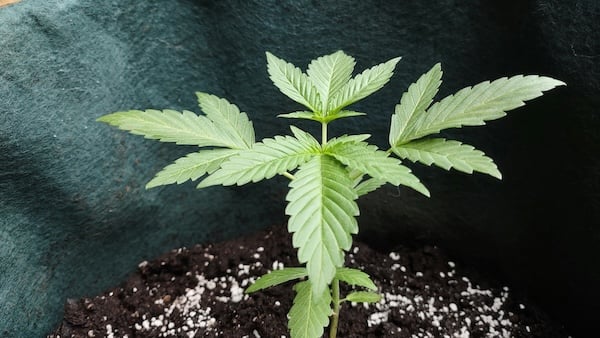
Image credit: Indorgo
Your cannabis seedlings will typically be ready to transplant around days 14–21, when their roots reach the sides of their starter cups. The appearance of about 3-4 nodes (or sets of leaves along the stem), or leaves that spread beyond the cup’s perimeter, are also good signs your seedlings are ready to be moved.
How to Transplant Your Weed Seedlings
- Water the seedling a few hours beforehand so the root ball holds together.
- Fill the new pot with moist growing medium and make a hole large enough for the root ball.
- Turn the starter cup upside down, support the soil and stem, and gently slide the plant out.
- Place it in the hole, planting slightly deeper if the stem has stretched.
- Backfill around the roots and water lightly to settle the medium.
- Keep the light a little gentler for the next 24–48 hours while the plant adjusts.
Note: Plant autoflowering seeds directly into their final 3–5-gallon pot to minimize root disturbance and avoid slowing growth after transplanting. See our guide to growing autoflower weed.
Growing outdoors? Harden off seedlings gradually over about seven days, then move them outside after the last frost. See our upcoming guide to when to plant cannabis outdoors.
Common Cannabis Seedling Problems—and How to Fix Them
| Symptom | Likely cause | What to do |
| Tall, thin stem | Light too far away or too weak | Move the light closer. Bury part of the stretched stem when transplanting. |
| Drooping leaves | Often overwatering | Let the growing medium dry somewhat and check drainage before watering again. |
| Damping-off: stem pinches at soil level and seedling collapses | Soilborne pathogens, including Pythium, Rhizoctonia, and Fusarium, favored by overly wet conditions | Prevent this situation with clean growing medium, careful watering, and good airflow. Infected seedlings usually cannot be saved (Pundt, 2024). Infected seedlings usually cannot be saved (Pundt, 2024). Infected seedlings usually cannot be saved (Pundt, 2024). |
| Seed shell stuck on cotyledons (“helmet head”) | Shell hasn’t loosened | Mist the shell and wait. If it remains stuck after 1–2 days, try loosening it gently. Never force it. |
| Yellowing leaves | Overwatering, nitrogen deficiency, or normal cotyledon aging | Check soil moisture first. Pale lower true leaves may indicate nitrogen deficiency; yellowing cotyledons alone is usually normal. |
| Burnt tips or bleached leaves | Excess nutrients or overly intense light | Brown, crispy tips suggest nutrient burn; bleaching on upper leaves may indicate light stress. Reduce the likely source. |
| Purple stems | Genetics or cold stress | Usually harmless if the seedling otherwise looks healthy. Check temperatures if growth is slow. |
A healthy cannabis seedling has bright-green leaves, a sturdy stem, short spaces between sets of leaves (internodes), and leaves angled upward toward the light. New growth should appear steadily, without persistent drooping or discoloration.
Keep an eye out for fungus gnats, too. Our guide to pest control for cannabis plants explains how to manage common pests.
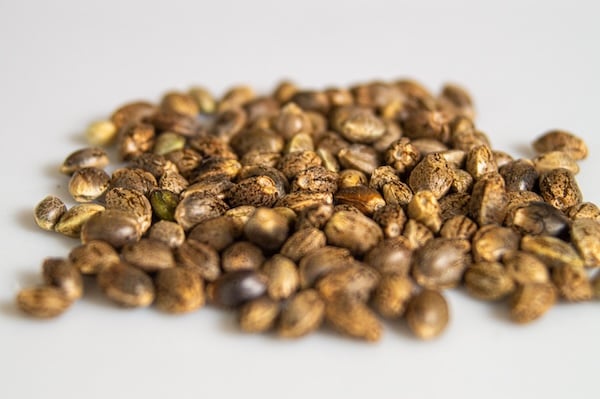
Image credit: Derrick Brown
Starting Strong With the Right Seeds
Cannabis seedlings may be delicate, but caring for them doesn’t have to be complicated. Keep them warm and humid, avoid overwatering or overfeeding, and provide steady, gentle light.
The best way to kick off the process is to begin with high-quality, viable seeds. Beginners may find it especially useful to begin with one of these easy-to-grow cultivars. If you’ve decided you want to try an efficient, more low-maintenance strain, we also have a section devoted entirely to autoflowering seeds.
FAQs
How long is the seedling stage for weed?
The cannabis seedling stage typically lasts two to three weeks. It ends as the plant develops three to five nodes (points where new leaves emerge along the stem) and several sets of true leaves. Autoflowers may progress a little sooner.
How often should I water my cannabis seedlings?
Water when the growing medium begins to dry, not according to a fixed schedule. In a small cup, this may be every two to three days. Check the top inch of soil and the cup’s weight, using small amounts to avoid saturating the young root zone. See our guide to how often to water weed plants.
What is the best Fertilizer for Weed Seedlings?
Seedlings in nutrient-rich potting soil usually need no extra fertilizer for the first one to two weeks. In coco coir or hydroponic systems, introduce a diluted, balanced grow nutrient once the first true leaves appear. Follow your product’s feeding guidance to avoid damaging young roots.
How Tall Should a Cannabis Seedling Be?
By the end of its second week, a seedling may be around two to four inches tall, though genetics and growing conditions affect its size. Look for a sturdy stem and closely spaced nodes. A tall, thin stem with long gaps between leaves often signals insufficient light.
Why is my weed seedling falling over?
A long, thin stem that leans or topples often signals insufficient light, so adjust the light distance according to the manufacturer’s guidance. If the stem looks pinched, dark, or rotted where it meets the soil, damping-off may be responsible. Affected seedlings are rarely saved, so remove them and avoid overwatering.
Can I put cannabis seedlings outside?
Yes, but harden them off gradually over about a week, starting with short periods in a sheltered, shaded spot before increasing sun exposure. Wait until the last frost has passed before planting outdoors. Many growers start seedlings indoors to protect them during their most vulnerable stage. See our upcoming guide to when to plant cannabis outdoors.
References
Boucher, C. (2026a). Seedlings. Gardening at USask, University of Saskatchewan. https://gardening.usask.ca/articles-and-lists/articles-cannabis/articles-growth-cycle/seedlings.php
General Hydroponics. (n.d.). FloraSeries 3-part feed program. https://generalhydroponics.com/pages/flora-series-3-part-feed-program
Hesami, M., Pepe, M., & Jones, A. M. P. (2023). Morphological characterization of Cannabis sativa L. throughout its complete life cycle. Plants, 12(20), Article 3646. https://doi.org/10.3390/plants12203646
Iowa State University Extension and Outreach. (2024, December 6). How do I know if I am providing the right amount of light for my seedlings? https://yardandgarden.extension.iastate.edu/faq/how-do-i-know-if-i-am-providing-right-amount-light-my-seedlings
Pundt, L. (2024, July). Damping-off of ornamental and vegetable seedlings. University of Connecticut Extension. https://ipm.cahnr.uconn.edu/damping-off-of-ornamental-and-vegetable-seedlings/
University of Saskatchewan, College of Agriculture and Bioresources. (n.d.). Cannabis. Gardening at USask. https://gardening.usask.ca/gardening-advice/sorted-by-plant/cannabis.php
Vivosun. (2026, September 30). VPD chart for grow tents: Ideal VPD ranges by stage. https://www.vivosun.com/growing_guide/what-are-vpds/
Voser, S. (2024, July 5). Seedling phase in cannabis plants: Grow healthy cannabis seedlings. Sensi Seeds. https://sensiseeds.com/en/blog/best-conditions-for-seedlings/
Wollaeger, H. M., & Runkle, E. S. (2014). Growth and acclimation of seedlings to daily light integral. HortScience, 49(5), 620–625. https://doi.org/10.21273/HORTSCI.49.5.620

No Comments