

What Is a Feminized Cannabis Seed and How Does It Work
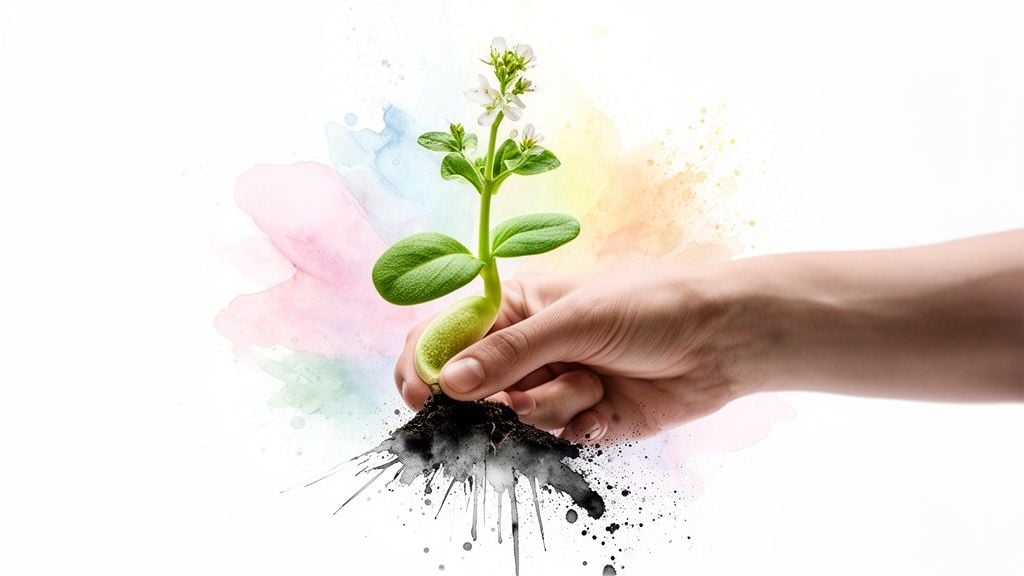
If you’re new to growing cannabis, you’ve probably heard the term “feminized seeds” thrown around. So, what exactly are they?
Think of it this way: a feminized cannabis seed is a seed that's been specifically bred to produce a female plant almost every single time—we're talking a 99% success rate. This is a huge deal for growers because only female plants produce the resinous, cannabinoid-rich buds that most people are after.
Using feminized seeds takes the guesswork out of cultivation. You don't have to worry about unwanted male plants popping up, which can pollinate your females and turn a beautiful crop of buds into a seedy, less potent harvest.
What Is a Feminized Cannabis Seed
Imagine planting a vegetable garden, but with a catch: half of your plants will never produce any vegetables. That's pretty much what it’s like growing with regular, non-feminized cannabis seeds. You get a roughly 50/50 shot of ending up with a male or a female plant. A feminized cannabis seed is the smart solution to that problem.
These seeds are produced through a clever process that essentially tricks a female plant into creating pollen. This "female pollen" is then used to fertilize another female, resulting in seeds that carry only female genetics. For anyone whose main goal is a harvest of smokable flowers, this is the way to go.
Male plants are a real headache for the average grower. They take up precious space, light, and nutrients, and their pollen can travel far and wide. If they pollinate your females, the plants will switch their energy from producing potent buds to making seeds.
The Core Advantage for Growers
The biggest benefit here is efficiency. When you use feminized seeds, you can be confident that every plant you put time, effort, and resources into will be a productive one. It makes your entire grow operation more predictable and ultimately more rewarding.
This kind of reliability is a massive help for:
- Beginners: If you're just starting out, you can focus on mastering the basics of watering, feeding, and lighting without the extra chore of sexing your plants and culling the males.
- Indoor Cultivators: Got a small grow tent or closet? Every square inch is valuable. Feminized seeds guarantee you won’t waste any of that limited space on a non-budding male.
- Commercial Operations: On a larger scale, the savings on labor and resources are massive. It leads to more consistent quality and a better bottom line.
Choosing a feminized cannabis seed is like buying a non-stop ticket to your destination. You know you're headed straight for a garden full of flowering female plants, without the 50% chance of a detour you never wanted.
Feminized vs Regular vs Autoflower Seeds at a Glance
To really get a handle on feminized seeds, it helps to see how they stack up against the other main types you'll find on the market. Each has its own place, depending on your goals as a grower.
This quick table breaks down the key differences.
| Seed Type | Guaranteed Female Plants | Light Cycle Dependent | Ideal For |
|---|---|---|---|
| Feminized | Yes (99%+) | Yes | Growers wanting guaranteed buds, beginners, indoor grows |
| Regular | No (50/50 Chance) | Yes | Breeders, creating new strains, genetic preservation |
| Autoflower | Yes (99%+) | No | Quick harvests, multiple grows per season, simplicity |
As you can see, if your goal is a straightforward harvest of high-quality buds without the hassle of dealing with male plants, feminized seeds are an excellent choice. They offer the perfect balance of control and predictability.
The Science Behind Creating Feminized Seeds
So, how exactly do you guarantee a seed will grow into a female plant? It sounds like some kind of high-tech genetic wizardry, but it’s actually a clever horticultural trick that works with the plant’s natural biology. Breeders have been honing this technique for decades, and it’s become remarkably reliable.
The core idea is to convince a healthy female plant to do something it normally wouldn’t: produce pollen. This is done by introducing a specific, controlled stressor right as the plant begins to flower. You can think of it as nudging the plant down a different reproductive path to get a very particular outcome.
This “female pollen” is special because it only carries female (XX) chromosomes. When you use it to pollinate another female plant, the seeds that form have no male (Y) chromosome anywhere in their DNA. That’s the secret sauce—it ensures nearly every single seed grows up to be a flower-producing female.
Common Feminization Methods
Breeders have a couple of tried-and-true methods for getting a female plant to make pollen. Both work by blocking ethylene, a plant hormone that’s essential for a plant to develop its female flowers. Interrupting this process safely encourages the plant to form male pollen sacs instead.
Here are the two most common techniques:
- Colloidal Silver: This is a simple solution of microscopic silver particles floating in distilled water. When sprayed onto a female plant early in the flowering stage, the silver ions get in the way of ethylene production, triggering the growth of pollen sacs. It’s a popular and straightforward method for many breeders.
- Silver Thiosulfate Solution (STS): Often seen as the gold standard for professionals, STS is a more potent and stable mixture of silver nitrate and sodium thiosulfate. It tends to deliver more consistent results and usually requires fewer applications than colloidal silver.
A quick but important safety note: any part of a plant treated with these silver solutions should never be consumed. This process is strictly for creating pollen to produce the next generation of seeds.
The science behind feminized seeds is really about strategic intervention. By using a substance like colloidal silver, breeders can guide a female plant to create “female pollen,” ensuring the offspring inherit genetics exclusively from two female parents for a predictable, bud-focused harvest.
Ensuring Genetic Purity and Stability
This is where the real magic happens for growers. Because both parents are female, the resulting seeds are genetically hardwired to be female, too. The process completely removes the 50/50 lottery you get with regular seeds, where a male and female plant cross-pollinate naturally.
Reputable suppliers like Liberty Seed Bank work with breeders who have truly mastered these methods. They start with exceptionally stable and healthy female plants for both pollen creation and pollination, which drastically reduces the risk of unwanted traits like hermaphroditism. It’s this commitment to a precise, scientific process that gives growers the confidence that their feminized seeds will deliver the all-female garden they’re counting on.
Why Growers Choose Feminized Seeds for a Better Harvest

If you ask a seasoned grower why they love feminized seeds, you’ll likely hear one word over and over: efficiency. A successful grow is all about making the most of your resources—your space, your time, and your money. Feminized seeds are probably the single biggest efficiency hack in a grower’s toolbox, ensuring every bit of effort goes directly toward a canopy full of beautiful, harvestable buds.
Think about it this way. With regular seeds, you’re playing a numbers game. You could spend weeks carefully tending to your plants, only to find out half of them are males that won’t produce any flower. With feminized seeds, you flip the odds completely in your favor. Suddenly, every plant is a producer, which means bigger, more reliable yields without needing any extra space or work.
Maximizing Your Grow Space and Resources
Whether you’ve got a small grow tent tucked into a closet or a dedicated plot in the backyard, space is always precious. Feminized seeds guarantee you won’t waste a single inch on a male plant that you’ll just have to pull out later.
But it’s about more than just physical real estate. This efficiency trickles down into everything else:
- Saving on Nutrients and Water: You’re not pouring expensive nutrients and water into plants that won’t give you anything back.
- Optimizing Light Usage: Every photon from your grow light goes toward fueling female plants to produce dense, sticky, resin-covered buds.
- Reducing Labor: You can say goodbye to the daily anxiety of checking each plant for tiny male pollen sacs as they enter the flowering stage.
The peace of mind that comes with feminized seeds is a total game-changer, especially if you’re just starting out. It lets you skip one of the trickiest parts of the process—sexing plants—so you can focus on mastering the fundamentals like watering, feeding, and training. It just makes the whole journey to a successful harvest that much smoother.
This shift toward efficiency has completely reshaped the modern cultivation scene. It’s no accident that feminized seeds captured 48.9% of the global market’s revenue share, making them the top choice for growers everywhere. Their dominance is a testament to how much cultivators value reliability. You can find more insights about the cannabis seed market trends in recent industry reports.
Predictability and Peace of Mind
Beyond the practical perks, feminized seeds offer something incredibly valuable: a predictable, low-stress growing experience. For new growers, trying to spot male plants can be a nail-biting process. It’s easy to mistake a female calyx for a male pollen sac, and if you miss even one male, it can pollinate your entire crop and fill your buds with seeds.
Using a feminized cannabis seed takes all that guesswork off the table. You can plant your seeds with the confidence that you’re on a straight path to a garden full of flowering females. This makes planning everything from your final yield to your canopy management way easier, turning what could be a gamble into a project with a dependable outcome.
What Are the Downsides of Feminized Seeds?
Feminized seeds are a game-changer for most growers, but they aren’t a one-size-fits-all solution. Knowing their limitations helps you decide if they’re truly the right choice for your garden and your specific goals.
The biggest drawback really only matters to one group of people: cannabis breeders. If you’re hoping to create your own unique strains by cross-pollinating plants, feminized seeds are a non-starter. Breeding requires male plants to provide the pollen, and the whole point of feminized seeds is to eliminate males from the equation.
For anyone serious about creating new genetics, regular seeds are the only way to go. They give you the mix of male and female plants essential for any breeding project.
Are There Any Other Trade-Offs?
Beyond breeding, there are a couple of other things to keep in mind. These are less about what the seeds can’t do and more about your initial investment and the plant’s stability.
-
Slightly Higher Upfront Cost: You’ll notice feminized seeds cost a bit more than regular seeds. It’s best to think of this as an investment rather than an expense. You’re paying a premium for the guarantee that every single plant will be a bud-producing female, which saves you a ton of time, garden space, and nutrients down the road.
-
The Small Risk of “Hermies”: In rare cases, a female plant can develop male pollen sacs alongside its female flowers. This is called hermaphroditism. While older, less refined feminization methods could lead to unstable genetics, this is incredibly uncommon with seeds from a quality breeder today. Now, it’s far more likely to be caused by major environmental stress—things like light leaks during the dark cycle or wild temperature shifts.
A good way to think about it is that a well-bred feminized seed is genetically solid, but like any living organism, it can get stressed out. Give it a stable, happy home, and you’ll keep problems at bay.
At the end of the day, these limitations are pretty minor for the average home grower. The benefits of knowing you’ll have a garden full of female plants almost always outweigh the trade-offs. If you are worried about stress, it’s a good idea to learn the early signs of a hermie plant so you can catch any issues before they become a problem.
How to Choose the Right Feminized Seeds
Stepping into the world of feminized seeds can feel a bit like standing in front of a giant menu at a new restaurant. You see so many options, but which one is right for you? Picking a strain is about way more than just a cool name—it’s about matching the plant’s genetics to your goals, your growing space, and the experience you’re after.
The first big decision you’ll make is choosing between the three main categories: Indica, Sativa, and Hybrid. Think of these as different personality types for your plants. Each one comes with its own unique way of growing and a distinct profile of effects, making this the perfect starting point for narrowing down your search.
Indica, Sativa, or Hybrid
Indica-dominant strains are the short, bushy ones. They tend to stay compact, which makes them a fantastic choice for growers with limited vertical space, like in a small tent or closet. They also usually have shorter flowering times, meaning you get from seed to harvest a little quicker.
Sativa plants are the complete opposite. They grow tall and lanky with more open branching, so they absolutely love outdoor setups where they have plenty of room to stretch for the sun. Their flowering period is typically longer, but they often reward a patient grower with some seriously impressive yields.
And then there are Hybrids. These are truly the best of both worlds, blending traits from their Indica and Sativa parents. This category offers a massive range of growth patterns and effects, giving you the flexibility to find a feminized seed that’s just right. If you want to go deeper, you can learn more about autoflower vs feminized seeds in our guide.
Your growing space is probably the single most important factor. A tall, sprawling Sativa might sound amazing, but it will quickly become a tangled mess in a short grow tent. Matching the plant’s natural size and shape to your environment is absolutely key to a smooth, successful grow.
To help you visualize the differences and make a quick decision, here’s a simple breakdown of the main strain types.
Choosing Your Feminized Strain Type
| Strain Type | Typical Plant Size | Common Effects | Best For Growers… |
|---|---|---|---|
| Indica | Short, bushy, and dense | Relaxing, calming, "body high" | …with limited indoor space or who want a faster harvest. |
| Sativa | Tall, lanky, and spacious | Uplifting, energetic, "head high" | …with plenty of vertical room, especially outdoors. |
| Hybrid | Varies widely | Balanced, best of both worlds | …who want to fine-tune effects and growth traits. |
This table is a great starting point, but remember that a Hybrid can lean heavily one way or the other, so always check the specific strain’s description.
Aligning Cannabinoids with Your Goals
Once you’ve figured out the plant’s physical traits, it’s time to think about the end result. What kind of experience are you aiming for? This is where the plant’s cannabinoids, like THC (tetrahydrocannabinol) and CBD (cannabidiol), come into the picture. A feminized cannabis seed from a trustworthy seed bank will always give you clear information on its typical cannabinoid profile.
Here’s a quick look at what to expect:
- High-THC Strains: These are bred for their potent psychoactive effects and are a popular choice for recreational use and deep relaxation.
- High-CBD Strains: Chosen for their non-intoxicating, therapeutic qualities, these strains are often used for wellness to promote calm and help with discomfort.
- Balanced THC/CBD Strains: These offer a perfect middle ground, providing mild effects with the benefits of both cannabinoids. You’ll often see them described as having a 1:1 ratio.
By thinking first about how a strain will fit in your garden and second about what you want from your harvest, you can confidently pick the perfect feminized seeds to get your growing journey started on the right foot.
A Simple Guide to Germinating Your Feminized Seeds
You’ve picked out the perfect feminized cannabis seeds, and now the real fun starts. Germination is that first, crucial step in your growing journey. It’s the moment you wake the seed from its slumber and coax it into sending out its very first root.
Think of it as giving your plant its first breath of life. Getting germination right sets you up for a strong, healthy plant and a bountiful harvest later on. While there are a few ways to do it, the paper towel method is a classic for a reason—it’s simple, reliable, and you get to watch the magic happen up close.
The Paper Towel Method Step by Step
This tried-and-true technique creates the dark, humid, and warm hideout that seeds love. You only need a few things you probably already have at home and a gentle touch.
Here’s how to get your feminized seeds off to a roaring start:
- Get Your Gear Ready: Grab two clean plates, a few paper towels, and some room-temperature distilled or purified water. It’s best to skip tap water, as the chlorine in it can sometimes slow things down.
- Dampen the Towels: Get two paper towels damp. You want them fully moist but not sopping wet. Lay them down flat on one of the plates.
- Place Your Seeds: Gently set your seeds on the moist towel, giving them about an inch of space from each other. This ensures their new roots have room to stretch out without getting tangled.
- Cover Them Up: Place the other two damp paper towels over the seeds. Then, put the second plate on top to create a dark little dome that locks in moisture and warmth.
- Find a Cozy Spot: Tuck the plates away in a consistently warm, dark place. The top of a fridge or a kitchen cupboard usually works perfectly. The sweet spot for temperature is between 70-85°F (21-29°C).
From Sprout to Seedling
Peek in on your seeds every day to make sure the towels are still damp. A light misting of water will do the trick if they start to dry out. Before you know it—usually in just a few days—you’ll see a tiny white taproot pop out. That’s your green light to get planting!
Once the taproot is about a quarter to a half-inch long, it’s time to move. This little root is incredibly delicate, so handle it with extreme care. Tweezers are your best friend here. Plant it with the root pointing down into your soil or starter cube.
After planting, your seedling will need some TLC. Give it some gentle light from a low-intensity grow lamp, keep the soil moist but not soggy, and maintain a stable, warm environment. This early care is what builds a strong foundation for a thriving plant. For a deeper dive into this stage, our guide on the germination time for seeds covers everything you need to know.
Ready to put your knowledge to the test? Here at Liberty Seed Bank, we’ve got a fantastic selection of lab-tested feminized seeds that are perfect for growers of all stripes. Take a look at our strains and find the right fit for your garden.
Shop Our Full Collection of Feminized Seeds at Liberty Seed Bank
FAQs
Are Feminized Seeds More Difficult to Grow?
Quite the opposite! They are actually much easier for beginners. Feminized seeds take one of the biggest headaches out of the growing process: you don’t have to worry about identifying and pulling out male plants before they ruin your crop.
This lets you put all your energy into learning the fun stuff—dialing in your watering schedule, getting the lighting just right, and feeding your plants what they need. You can rest easy knowing that every single plant in your tent is working toward a great harvest.
Feminized seeds are the perfect starting point for new growers. They simplify the entire experience by removing the guesswork of plant sex, leading to a much more predictable and enjoyable journey from seed to harvest.
Can You Get Seeds from a Feminized Plant?
Nope, not under normal circumstances. A healthy feminized plant is focused on one thing: producing big, resin-packed, seedless buds (the sinsemilla we all want). It will only create seeds if it gets pollinated, either by a nearby male plant or if it’s intentionally stressed into making its own pollen.
Do Feminized Seeds Ever Produce Male Plants?
It’s incredibly rare, but it can happen. When you buy from a trusted source, you’re looking at a 99%+ success rate for getting female plants. If a male plant does pop up, it’s almost always a sign of shaky genetics—something that top-notch breeders have worked hard to breed out of their strains.

No Comments